Pick a company that has run events like yours, owns well-maintained gear and sends a technical crew that stays on site. Get written quotes that spell out what’s included. Then ask a few direct questions before you sign. That’s the short version. The longer one matters because a great event can fall flat when the sound cuts out or the lights wash out the stage. Oklahoma City has plenty of options for weddings, galas, concerts, conferences and festivals. Not all of them fit every job. Below you’ll find which services to expect, what to compare, how pricing works and what to ask before you book event production Oklahoma City.
Quick Answer
To choose an event production company in Oklahoma City, look for a team that has handled events like yours, owns reliable sound, lighting and video gear and provides a technical crew on site. Compare written quotes line by line, including setup, labor and teardown fees. Check reviews and past work, then ask about backup equipment, insurance and cancellation terms before you sign.
What Services Should an Event Production Company Offer?
A full-service company handles the technical side so you can focus on your guests.
Audio and Sound Systems
Sound quality matters at every event. A speech has to be clear. Music has to fill the room without being ear-splitting. A good provider will have speakers appropriate to your space, mics suited to the application, and a mixer someone knows how to operate. Ask about wireless mics, backup equipment and monitors for the performers. A ballroom will have very different requirements from a field or warehouse; if you can, ask to hear a sample of their work or to see a recent installation.
Event Lighting and Stage Design
Lighting sets the tone. It can spotlight a stage, warm a room, or add energy to the dance floor. Stage design brings it all together. You need to know whether they have uplighting, spotlights, truss and staging. They should be able to show you what the room will look like. If it’s a hotel ballroom or another venue with specific rules, they should be able to tell you what’s permitted. You should also ask about power requirements, as lighting and sound can easily draw more than a venue expects.
Video Screens and Projection
Screens allow people in the back of the room to see what’s going on. They can show slides, video clips, live camera feeds, and sponsor messages. Your options include LED walls, projectors and monitors. The right type depends on the room size, ambient light, and what you intend to show. You need to confirm how the content will be loaded and who will run it during the event. You also need to check sightlines from the back, the sides, and the middle.
Equipment Setup and Technical Support
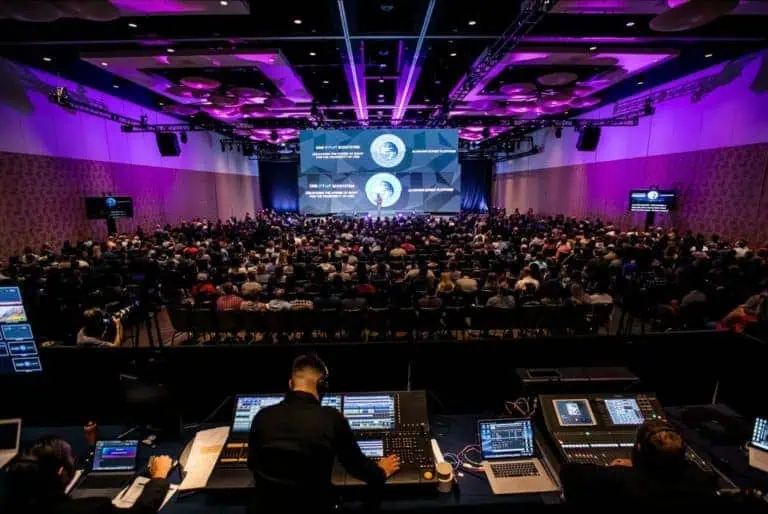
Gear is only half the story. Somebody’s got to set it up, test it and run it. Ask about load-in time, sound checks, and on-site tech. You’re looking for a crew that gets there early and stays until the end. If an issue comes up halfway through a keynote, you need someone who can handle it immediately. That’s the bit that people often overlook.
What Should You Look for When Comparing Event Production Companies?
Once you know the services, compare the companies. A few factors tell you more than a glossy brochure.
Experience With Your Event Type
A company that does weddings every weekend is probably not the ideal company to do a corporate conference with. A company that specializes in weddings may not have the experience to run a concert. Ask what proportion of their work is similar to yours. Ask for examples of work at similar venues and at similar sizes. Experience in your event type will mean far fewer surprises.
Equipment Quality and Availability
Ask what the company owns and what they rent. Ask how the company maintains its own equipment and checks rented gear before each event. Find out what the key bits are and their age. Ask what the contingency is if a piece fails during the event. A good company will have spares. Confirm that the required equipment will be available for your event date.
Technical Crew and On-Site Support
The crew is just as important as the equipment. Find out who’s going to be at your event. How many techs? What are their roles? Will the person you meet during the planning phase actually be there on the day? How do they deal with problems under pressure? Good crews will be calm and get on with the job, quietly fixing things as the event proceeds. Find out who the backup is in the event that the lead tech does get ill.
Client Reviews and Past Projects
Read the reviews carefully. Look for reviews that mention communication, punctuality, and problem-solving. Look for patterns in the reviews, not just one fantastic or one awful review. Ask for photos or video from the event. If you can, call a recent client. Ask them a few straightforward questions Did the crew turn up on time? Did the sound work? Would they use the company again?
How Do You Compare Event Production Costs?
Pricing for event production can be very confusing. The quotes you get can be very difficult to decipher, as they’ll often group the items in a very different way. Here’s how you can make sense of them.
Equipment Rental and Package Pricing
Lots of companies will offer packages that bundle in the sound, the lighting and a basic crew. Others will price the individual items. The packages may well be the simpler option and may in fact end up being cheaper. The itemized quotes give you far more control. You need to find out what’s in each package and what’s extra. Check for any limits on the number of hours you can use it. Compare the packages on the basis of what they contain rather than what they’re called.
Setup, Delivery, and Labor Fees
Equipment won’t set itself up. Quotes should include delivery, load-in, labor, sound check and teardown. Some companies charge by the hour; others charge a flat rate. Overtime is an issue if there’s any chance your event is going to run long. Find out when the clock starts and when it stops and then find out what happens if your venue has restricted load-in times.
Additional Costs for Complex Events
Larger or more complex events usually cost more. An outdoor event might require weather protection, generators and additional staging. Oklahoma weather can be fickle so you’ll need to have a plan for wind, rain and heat. A large venue may require more speakers and/or screens. Livestreams, multiple stages and custom graphics all add to the cost. You’ll also need to consider permits, insurance and venue requirements.
What Questions Should You Ask Before Hiring an Event Production Company?
Bring a short list to every call. These questions bring out the details that matter.
- Have you worked at my venue or one like it? Familiar venues mean fewer surprises with power, access and acoustics.
- What’s actually in the quote? Make sure equipment, crew, setup, breakdown and any limitations are listed in writing.
- Who will be on site, and for how long? Names and roles are better than “our team.”
- Do you own your equipment? Ask about backups and what happens if something fails.
- How do you handle sound checks and rehearsals? Build in time before guests arrive.
- What’s your plan for bad weather or power issues? This matters for outdoor events and older venues.
- Are you insured? Ask for proof of liability insurance and check whether your venue has specific coverage requirements.
- What are your payment terms and cancellation policy? Know the deposit, the due dates and what happens if plans change.
- Can you share references from recent events? Past clients can tell you what a brochure won’t.
- How will we communicate before and during the event? A clear point of contact keeps things calm.
Conclusion
Choosing an event production company comes down to fit, quality and clarity. Look for services that cover sound, lighting, video and support. Compare experience, equipment, crew and reviews. Line up quotes by what’s included and ask about extra fees early. Then ask smart questions before you sign. If you’re starting your search for event production Oklahoma City, use this checklist to find a partner who’ll make your event run smoothly.